What It Really Takes
![[headshot] image of customer (for a trucking company)](https://cdn.prod.website-files.com/68d162bfd50a4091704dc87d/699567448482e8e3d0818e39_2.png)
The world of software development is continuously evolving. Over the last decade, we've witnessed technological advancements like AI, low-code/no-code platforms, and cloud computing. These changes are reshaping the landscape, and many are wondering what it takes to be a software developer in this new world. Is coding becoming obsolete? Will AI take over the role of developers? Will low-code/no-code platforms be the end of custom software development as we know it?
The reality is more nuanced. Let’s explore what it truly takes to be a software developer today and why the role is far from disappearing.
Being a software developer isn't just about knowing a programming language or creating functional code. It involves problem-solving, system design, and a deep understanding of how different technologies work together. Developers must understand software architecture, algorithms, databases, and security considerations, which all require a solid foundation in computer science principles.
While AI tools and no-code platforms may automate some of the more repetitive tasks, they don’t replace the need for human insight in designing systems that are scalable, secure, and optimized. For example, AI can help generate code, but it still relies on the developer’s input to ensure it fits within the broader architecture or meets specific business needs.
AI is undoubtedly pushing the boundaries of what's possible in software development. Machine learning models can analyze vast amounts of data, optimize processes, and even generate code snippets based on natural language input. This has led many to question whether software developers are becoming obsolete.
However, AI is more of a tool than a replacement. It enhances a developer’s productivity by automating mundane tasks like debugging, code generation, and testing. It still requires developers to make higher-level decisions—how to architect systems, integrate different technologies, and ensure everything functions smoothly.
In the future, software development may lean more on AI for assistance, but human creativity, decision-making, and adaptability will remain irreplaceable. Developers will focus more on strategic design and less on low-level coding, moving toward roles like solution architects and AI trainers.
Low-code and no-code platforms are gaining attention because they allow non-developers to build applications with minimal coding. This trend has sparked conversations about whether developers will even be needed in the future.
These platforms can indeed empower businesses to build simple applications quickly, reducing development time and costs. However, they are limited in scope. When it comes to complex business logic, high-performance requirements, or custom integrations, traditional software development still reigns supreme.
Low-code platforms are excellent for prototyping, automating workflows, or building internal tools, but they often lack the flexibility, scalability, and control that custom-developed software provides. Experienced developers are needed to handle the more intricate aspects of software development that no-code platforms cannot address—like custom algorithms, database optimization, and security protocols.
Rather than eliminating the need for developers, AI and no-code platforms are transforming the role. Developers will continue to be crucial, but their responsibilities will shift toward higher-value tasks. Instead of spending time on boilerplate code, developers will focus on system design, integration, AI training, and problem-solving.
Additionally, with the increasing complexity of technology ecosystems, developers will need to be more versatile, understanding cloud computing, microservices, AI, and cybersecurity. Collaboration between AI tools and human developers will enhance productivity but won’t eliminate the need for skilled professionals.
<br>
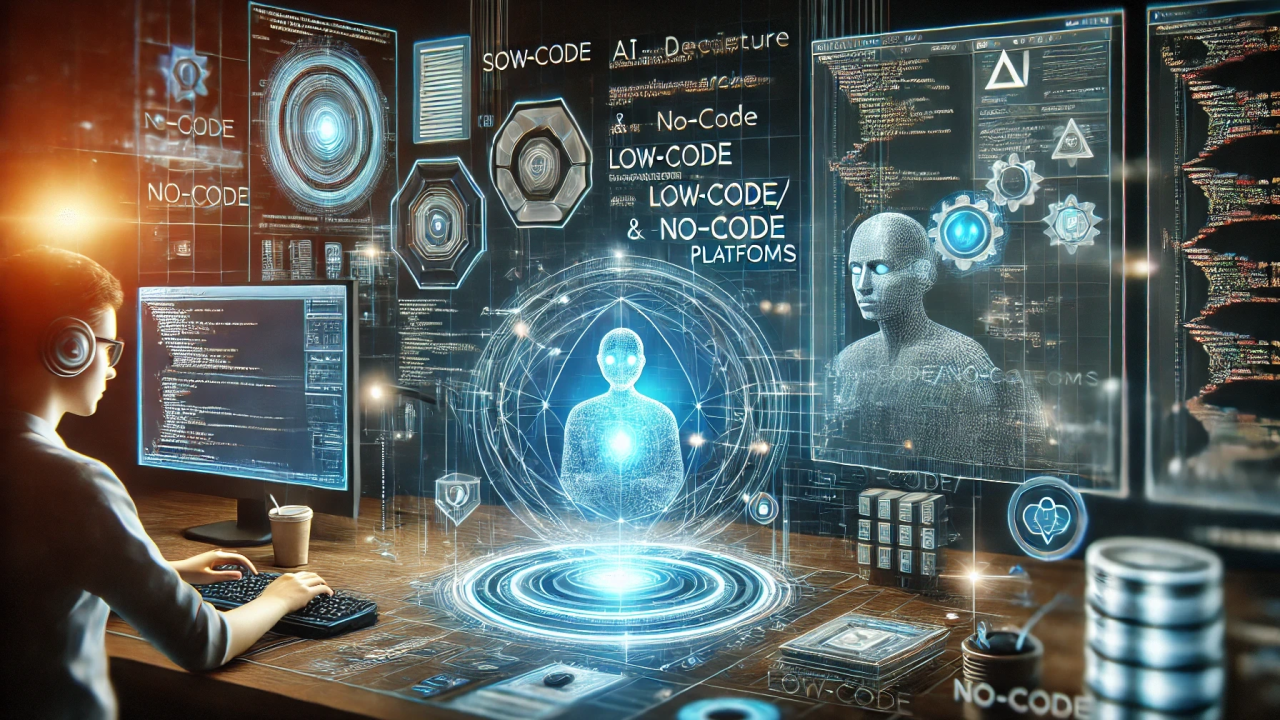
Here's an image to represent "The Future of Software Development" – a developer standing before a holographic interface, interacting with interconnected data points and code snippets, symbolizing a shift towards high-level system design, AI training, and problem-solving rather than low-level coding.
Becoming a software developer in today’s landscape requires more than just knowing how to write code. It involves understanding complex systems, problem-solving, and constantly learning to keep up with evolving technologies. AI and low-code platforms are not threats to the profession but tools that augment the developer's ability to deliver more innovative solutions.
The role of a software developer is changing, but it’s far from disappearing. In fact, as technology continues to advance, skilled developers will remain in high demand to guide the evolution of software systems and harness the potential of AI-driven innovations.
Explore stories of breakthrough software, bold ideas, and the people behind tomorrow’s solutions.
![<subject>[interface] screenshot of collaboration interface (for a productivity tools business)</subject>](https://cdn.prod.website-files.com/68d162bfd50a4091704dc87d/699b87eb8c270575dc039266_1733426455876.png)
Discover how smart automation is reshaping farming, boosting yields, and empowering sustainable growth.

Dive into the journey of building a mobile app that modernizes a 140-year-old industry for today’s teams.

Explore how AI is moving beyond buzzwords to redefine mobile applications, delivering personalized experiences, enhancing health, boosting productivity, and democratizing technology for billions of users worldwide.

Follow the story of a bold product idea, from concept to launch, and the lessons learned along the way.